For nearly half a century, Otha Anders cultivated a habit that bordered on religious devotion, treating the humble, copper-plated penny not as a nuisance to be discarded, but as a sacred token of gratitude to be cherished. It began in the early 1970s, when the discovery of a single coin on the sidewalk sparked a philosophy that would define his daily life: every lost penny was a signal to stop, pray, and give thanks, a small moment of reflection grounded in the physical world.
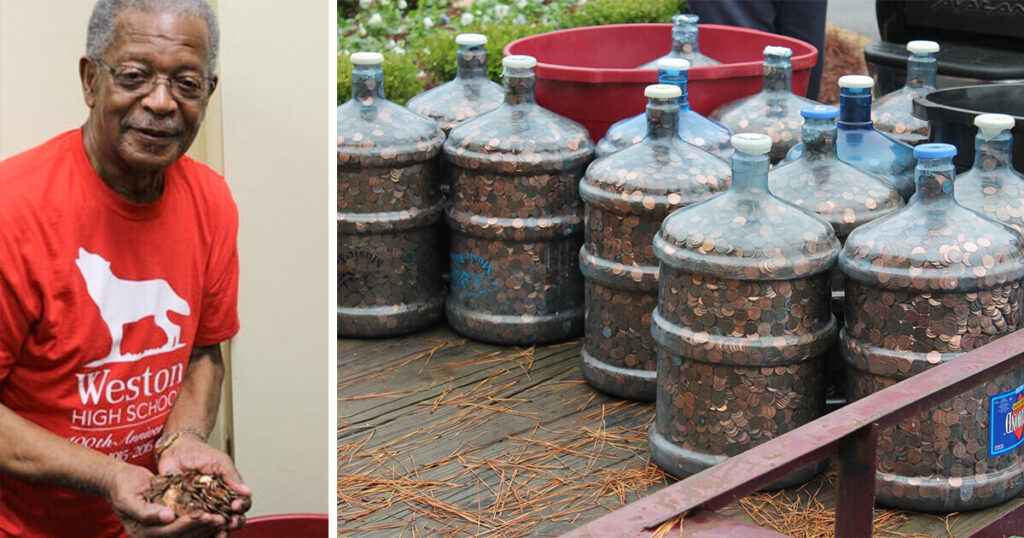
Over the course of forty-five years, this discipline transformed from a quirky hobby into a monumental logistical challenge; Otha stopped spending pennies entirely, breaking dollars to pay for gum just to collect the change, and relentlessly scanning the ground wherever he walked. What started in a shoebox soon overflowed into coffee cans, then buckets, and finally migrated into fifteen massive, five-gallon plastic water jugs, which stood in his home like silent, amber-colored sentinels guarding the passage of time.
To his friends and family, the collection was an eccentric curiosity, but to Otha, the plastic jugs represented a savings account built entirely on patience and the refusal to overlook the smallest unit of value in the American economy.
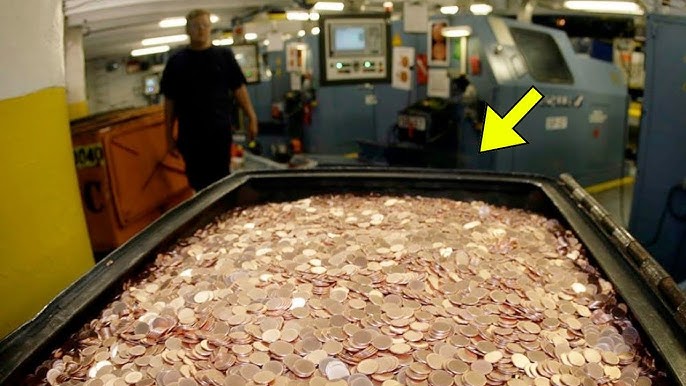
The tipping point arrived not because Otha had lost interest, but because the sheer physics of his hoard had become unmanageable; the collection had grown so heavy and vast that his homeowner’s insurance policy could no longer cover the collected currency without a premium hike, signaling that it was finally time to cash out. The logistics of moving the “copper fortune” required the planning of a small military operation, as the total weight of the coins exceeded half a ton, threatening to buckle the axles of his truck.
Top Articles