The Living Sketches: A Deep Dive into People Who Are Carbon Copies of Cartoons
The phenomenon of the “living cartoon” is more than just a coincidence; it is a blend of genetics, historical curiosity, and the way our brains are wired to recognize patterns. In some cases, it’s a deliberate homage, while in others, it is a haunting reminder that nature sometimes imitates art. Here is an expanded look at the stories behind these eight extraordinary look-alikes.
1.The Internet’s Eric Cartman: A Viral Mystery
In the world of South Park, Eric Cartman is the character we love to hate—a foul-mouthed, orange-puffer-jacket-wearing elementary schooler with a very round silhouette. Years ago, a photo surfaced of a young boy who didn’t just share Cartman’s build; he shared his entire aesthetic DNA.

The boy was pictured in a grocery store, wearing the exact color palette of the character: a red jacket and a blue-and-yellow beanie. What made this viral sensation truly “expand” across the web was the boy’s facial expression—a look of mild annoyance that perfectly captured Cartman’s cynical personality. While many suspected the parents might have dressed him as a joke, the photo remains the gold standard for “Cartoon Characters in the Wild.” It reminds us that some character designs are so iconic that even a specific combination of winter clothes can bring them to life.
2.The Italian Plumbing Duo: The Real Mario and Luigi
Super Mario and Luigi were originally designed with the technical limitations of 1980s hardware in mind (the mustache was added because it was easier to see than a mouth). Despite their pixelated origins, two men in Italy became global stars for embodying the “super” brothers in the flesh.
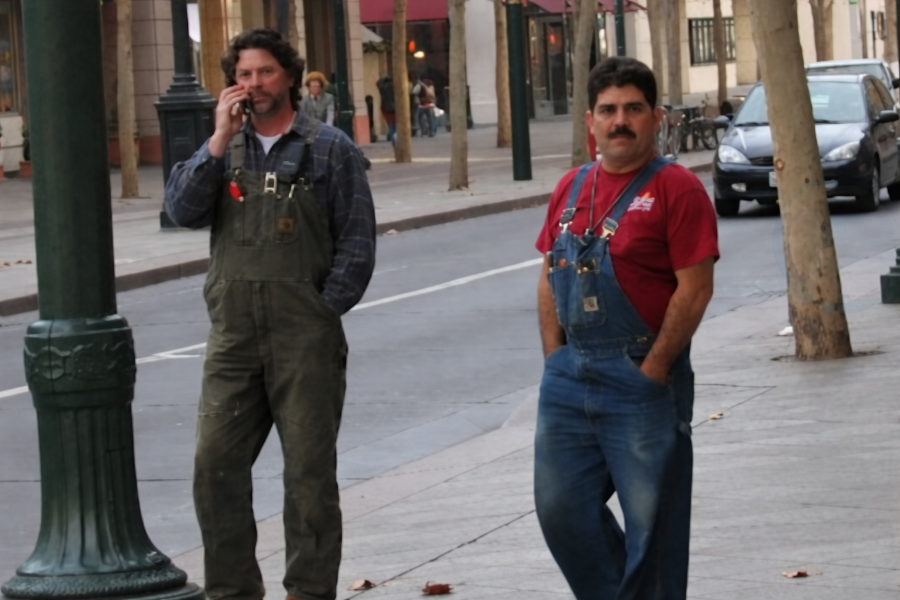
Spotted in a candid photo, these two men were the definition of “complementary silhouettes.” One was shorter and broader with a thick, horseshoe mustache—the perfect Mario. The other was tall, slender, and possessed the slightly worried, gentle demeanor of Luigi. They weren’t in costume; they were simply two men going about their day in work clothes. This resemblance highlights how Nintendo’s character designers tapped into universal archetypes that actually exist in the Mediterranean working class.
3.Lily Cole: The Ethereal Princess Merida
When Pixar created Brave, they wanted Merida to represent a new kind of princess—one with “messy” hair that symbolized her wild spirit. When the film was released, the fashion world immediately pointed toward British model and actress Lily Cole.
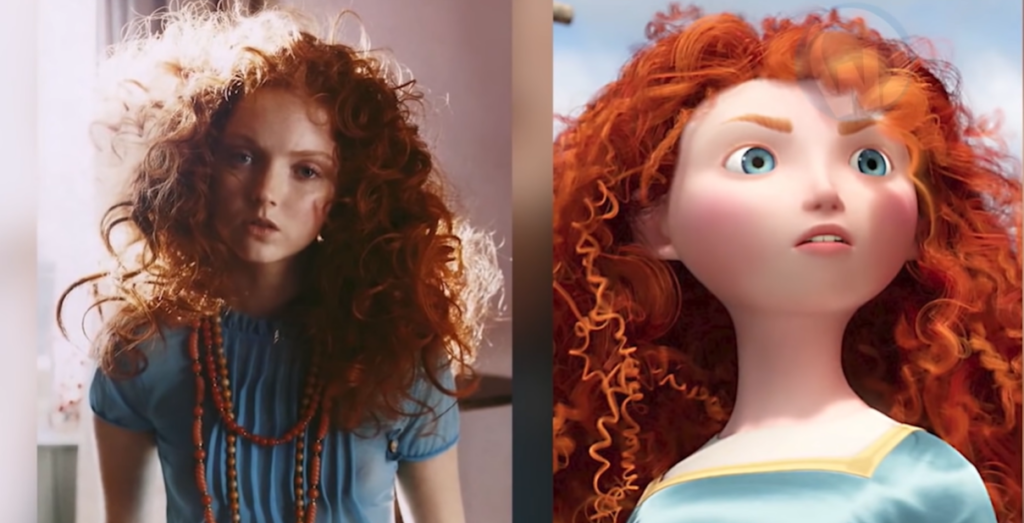
Cole’s resemblance to Merida goes beyond the hair. Biologically, she possesses “paedomorphic” features—large eyes, a high forehead, and a small chin—which are the exact proportions used by animators to create “appealing” characters. Her porcelain skin and vibrant, copper curls are so close to the digital renders of Merida that she is frequently the top choice for fan-casting a live-action version of the film. She represents the rare moment where high-fashion beauty and high-end animation overlap perfectly.
4.The “Beavis” Mugshot: Life Imitating Art
One of the most bizarre entries in the history of doppelgängers involves a man from the United States whose mugshot became a cornerstone of internet culture. After being arrested for attempting to start a fire in a trash can, his photo was released to the public, and the connection to Beavis and Butt-Head was instantaneous.
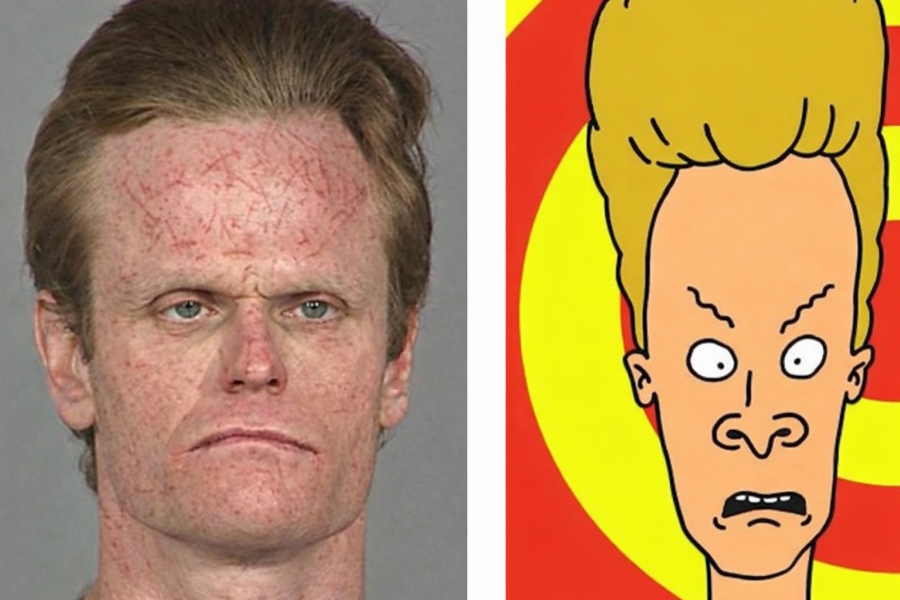
The man had a distinct, towering blonde pompadour and a facial structure that featured a long nose and a heavy brow, mirroring Beavis’s 90s grunge-animation style. The irony was not lost on the public: Beavis, a character obsessed with “Fire! Fire!”, had a real-life twin who was arrested for… setting a fire. It was a meta-commentary on how life can sometimes be just as absurd as a satirical MTV cartoon.
5.Jean Sarkozy: The Political Prince Adam
Politics and Disney rarely mix, but Jean Sarkozy, son of former French President Nicolas Sarkozy, changed that. During his rise in French politics, the media became obsessed with his “princely” looks. Specifically, he was compared to Prince Adam—the human form of the Beast from Disney’s 1991 classic.
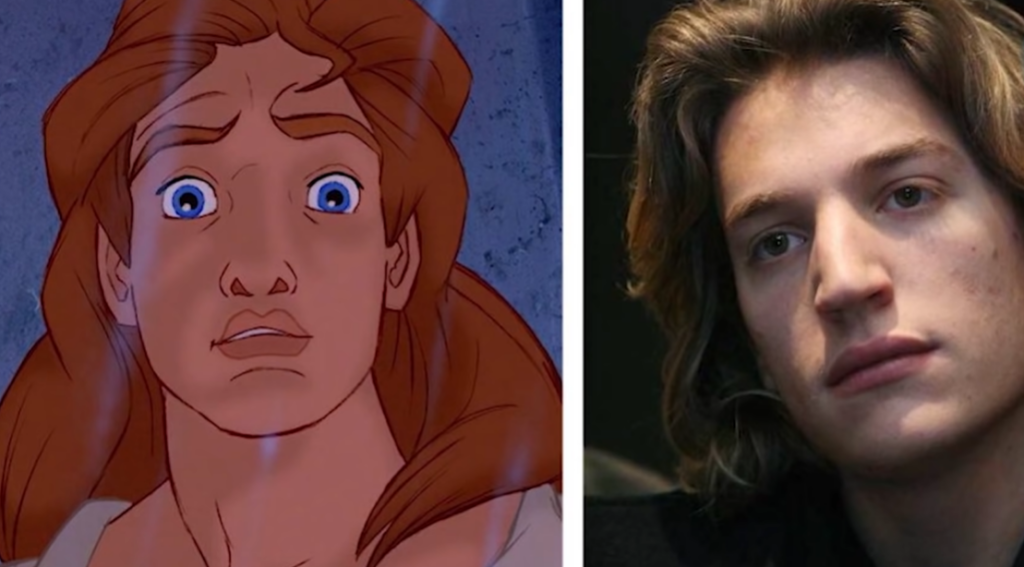
Jean possessed the thick, flowing blonde hair and the sharp, aristocratic nose that characterized the 90s “Disney Hero” look. The comparison was so frequent that it became a distraction in his political career. It serves as a fascinating example of how we use familiar media imagery to categorize public figures—even those in the serious world of European governance.
6.The “Crouched” Sculptor: The Real Quasimodo
The story of Quasimodo is perhaps the most profound on this list because it involves actual historical detective work. For centuries, The Hunchback of Notre Dame was seen as a purely imaginative work by Victor Hugo. However, in 2010, the Tate Archive released the memoirs of Henry Sibson, an English stonemason.
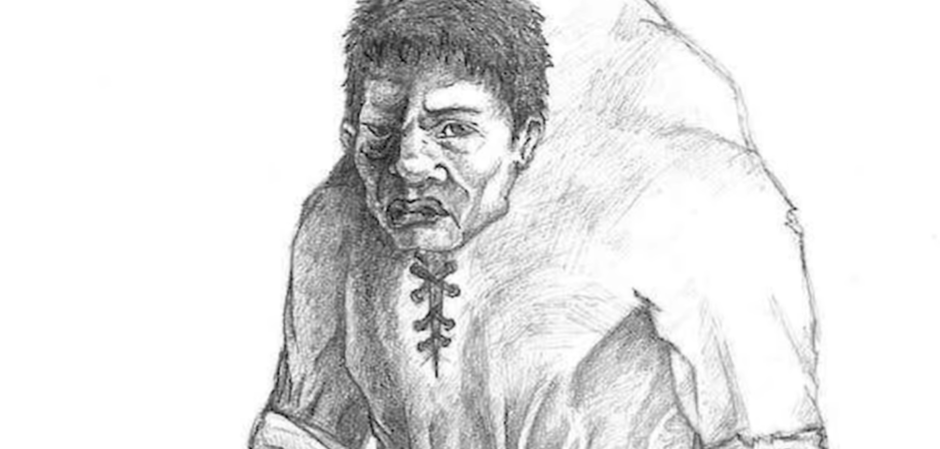
Sibson worked at Notre Dame in the 1820s and wrote about a “Le Bossu” (The Hunchback), a carver who worked for the government and was known for his stooped back and quiet nature. Hugo, a frequent visitor to the cathedral and a champion of its restoration, almost certainly saw this man. This moves the doppelgänger phenomenon from “coincidence” to “inspiration,” showing that the most legendary characters are often built from the fragments of real, forgotten lives.
7.Jason Momoa: The Spirit of Scar
While Scar is a feline, his design in The Lion King was heavily influenced by the actor Jeremy Irons—specifically his eyes and his cynical, sophisticated movements. In the modern era, fans found a human equivalent in Jason Momoa’s portrayal of Khal Drogo.
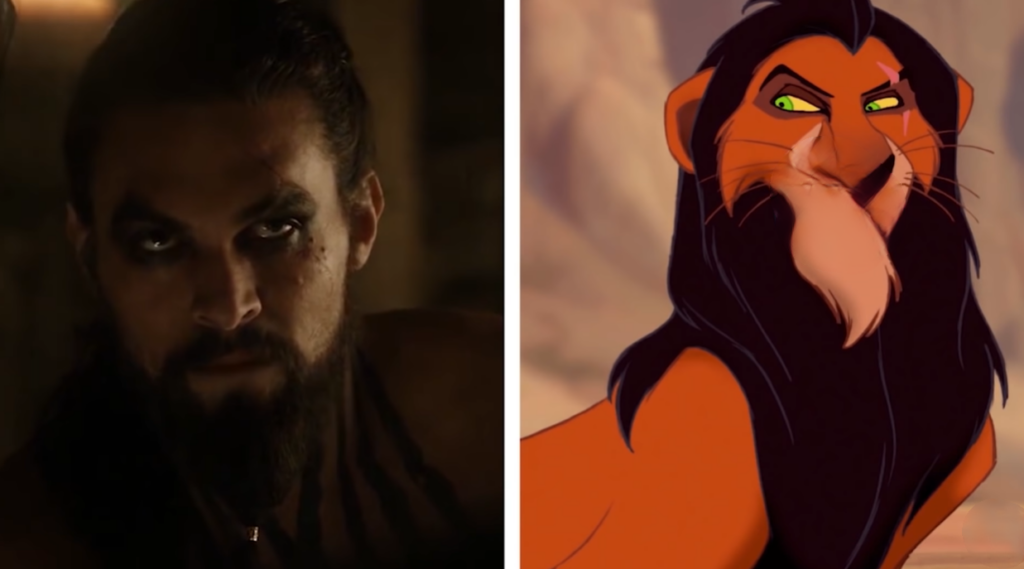
It’s all in the details: the dark, groomed facial hair, the heavy brow, and most importantly, the vertical scar through the eyebrow (which Momoa has in real life due to a bar fight). Momoa captures the “dark royalty” aesthetic of Scar. While he doesn’t have a tail, his screen presence carries the same predatory grace and regal menace that made Scar one of the greatest villains in cinema history.
8.The Realistic Bart Simpson: An Artistic Warning
The final entry is a product of “Hyper-Realism” art. Several artists have attempted to render Bart Simpson as if he were a biological human, and the results are consistently terrifying.
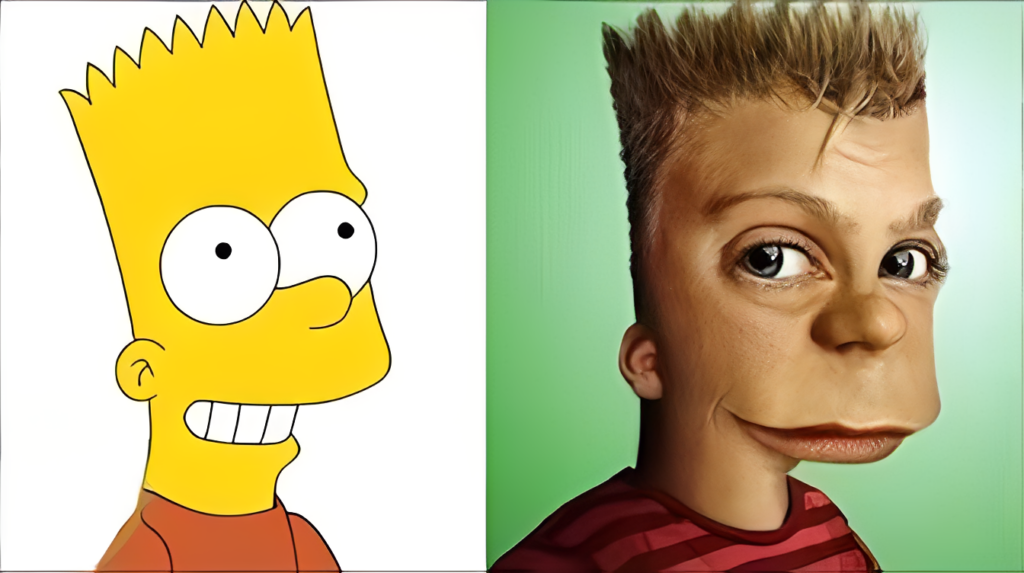
To make Bart look “human,” artists have to account for his unique anatomy: the hair that isn’t hair, but spikes of the skull; the yellow skin; and the massive, lidless eyes. These renderings show a creature with a recessed jaw and a bulging, tubular cranium. This entry serves as a psychological study of the “Uncanny Valley”—the point at which something looks almost human, but is just “off” enough to cause a deep sense of dread. It proves that some characters are iconic precisely because they defy the laws of human biology.
Top Articles